
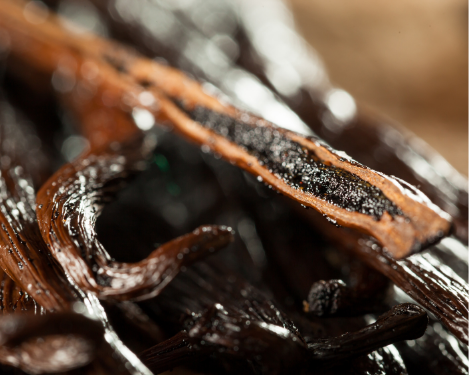
Vanilla is one of those ingredients that may seem simple, but its quality can make a noticeable difference in the final product. From delicate pastries and cakes to ice cream, chocolate, beverages, and other food products, good-quality vanilla brings a natural aroma and depth of flavor that is difficult to replace.
For businesses looking to purchase vanilla beans in larger quantities, choosing the right supplier is about more than simply finding the lowest price. Origin, bean quality, size, aroma, moisture, curing, consistency, and reliable supply all matter.
Indonesia is one of the world’s important vanilla-producing countries, with vanilla grown by farmers across several regions of the country. Indonesian vanilla beans are appreciated for their distinctive aromatic character and versatility in different culinary applications. If you are considering buying Indonesian vanilla beans wholesale, this guide will help you understand what to look for before choosing a supplier.
Indonesian vanilla beans are the cured fruit of the vanilla orchid, primarily Vanilla planifolia. After the vanilla pods are harvested, they go through a careful curing process that develops the characteristic dark color, aroma, and flavor associated with vanilla.
Indonesia’s tropical climate provides suitable conditions for growing vanilla. Many vanilla farmers cultivate their plants on a relatively small scale, making farming practices and post-harvest handling important factors in the quality of the final beans.
The character of Indonesian vanilla can vary depending on its growing region, curing method, and handling. This natural variation is one reason it is important for wholesale buyers to understand both the product and the supplier behind it.
Indonesian vanilla has become an interesting choice for businesses looking for natural vanilla with a distinctive origin and character.
One of its advantages is versatility. Indonesian vanilla can be used in a wide range of applications, including:
For pastry chefs and food businesses, whole vanilla beans also provide something that vanilla flavoring alone cannot fully replicate: the visual appeal of real vanilla seeds and the natural aroma released from the bean.
Buying vanilla in bulk requires a little more consideration than purchasing a small quantity for home use.
Here are some of the most important factors to consider.
Ask where the vanilla beans were grown and, when possible, learn more about their farming and sourcing process.
A trustworthy supplier should be able to explain the origin of their vanilla rather than simply describing it as “Indonesian vanilla." Understanding the origin can help buyers maintain consistency and communicate the story behind their ingredients to their own customers.
A good vanilla bean should have a pleasant, recognizable vanilla aroma. The aroma can vary depending on the origin and curing process, but it should generally be inviting and characteristic of properly cured vanilla. For professional buyers, smelling a sample before placing a large order can be a useful step.
Quality vanilla beans are generally dark in color and should have a healthy, natural appearance. Depending on the grade and product specification, beans may vary in size, color, moisture, and surface appearance. Small imperfections do not necessarily mean a bean is poor quality. What matters is understanding the specifications and whether they are appropriate for your intended application.
Vanilla beans are commonly sold according to their length or size.
For example, a supplier may offer different sizes such as:
The best size depends on how you plan to use the beans. For premium pastry applications where the whole bean is visible or used as part of the presentation, larger beans may be attractive. For extraction or food production, other specifications may be more important.
Moisture is an important characteristic of cured vanilla beans. Freshly cured, good-quality beans are generally flexible and have a soft, slightly oily texture. They should not feel excessively dry and brittle unless the product is specifically intended for a different application. At the same time, beans should be properly cured and stored. Excessive moisture or poor storage conditions can create quality problems. This is why it is useful to ask a supplier about their curing, storage, and packaging practices.
One of the terms buyers commonly encounter is “Grade A.” However, grading systems can vary between suppliers and markets, so it is important not to rely on the label alone. When evaluating Grade A vanilla beans, look at the actual product characteristics and ask the supplier about their specifications. Depending on the supplier, Grade A beans may generally be associated with characteristics such as good appearance, flexibility, moisture, aroma, and overall quality.
Rather than asking only:
“Is this Grade A?”
A better question is:
“What are your specifications for Grade A vanilla beans?”
This gives you a clearer understanding of what you are actually purchasing.
The right wholesale quantity depends on your business and how frequently you use vanilla.
A small pastry business may only need a few kilograms at a time, while a food manufacturer may require much larger quantities.
Before placing an order, consider:
It can be better to establish a consistent supply schedule than to purchase a very large quantity simply because the price per kilogram is lower.
Price is important, but it should not be the only factor.
A reliable supplier should be able to communicate clearly about:
Communication matters especially when buying internationally.
A supplier who responds clearly and honestly before the order is often easier to work with when you need to manage larger or recurring orders.
Yes, especially when you are working with a new supplier.
A sample allows you to evaluate the actual product rather than relying only on photographs or descriptions.
Depending on your business, you may want to evaluate:
For professional buyers, testing the vanilla in the actual application can be particularly useful.
A vanilla bean that looks beautiful may not necessarily be the best choice for your specific product. Your own testing can help you determine what works best.
Whether you are a pastry chef, bakery owner, chocolatier, ice cream maker, beverage business, or food manufacturer, choosing vanilla is ultimately about finding a balance between quality, consistency, application, and cost.
Indonesian vanilla beans can be an excellent ingredient for businesses looking for natural vanilla with a distinctive origin and versatile culinary applications.
At Vanillesia, we focus on Indonesian vanilla beans with attention to freshness, aroma, product specifications, and reliable service. We offer different bean sizes to accommodate different culinary and business needs.
If you are looking for Indonesian vanilla beans for your business, we would be happy to discuss your requirements and help you find a suitable option.
Yes. Indonesia produces high-quality vanilla beans, although quality can vary depending on growing conditions, harvesting, curing, storage, and handling. For buyers, it is important to evaluate the actual product specifications and supplier practices.
Indonesian vanilla beans can be used for cakes, pastries, ice cream, chocolate, beverages, desserts, sauces, and various food production applications.
It depends on your application. Larger beans may be suitable for premium culinary presentation, while different sizes can be appropriate for extraction, baking, or food production. Discussing your intended use with your supplier can help you choose the right specification.
Wholesale purchasing can make sense for businesses that use vanilla regularly. However, the appropriate quantity depends on your monthly usage, storage conditions, and expected demand.
Yes. A sample is a practical way to evaluate aroma, appearance, texture, size, and performance before committing to a larger order.
Vanilla beans should generally be kept in a cool, dry environment away from direct sunlight and excessive heat. Proper packaging and storage help preserve their aroma and quality.
Choosing wholesale vanilla beans does not have to be complicated. Start by understanding your own needs, then look beyond price. Consider the origin, aroma, appearance, size, moisture, curing, storage, supplier reliability, and consistency of the product.
Most importantly, work with a supplier who is willing to communicate openly and provide clear product information. For businesses searching for Indonesian vanilla beans, building a relationship with a reliable supplier can be just as important as finding the right bean.
Looking for Indonesian vanilla beans for your business? Contact Vanillesia to discuss your requirements and wholesale options.